E-cooking offers promising opportunities for rural enterprises in Nepal, boosting savings, health, and micro-hydropower sustainability. Our new report highlights key findings from twenty small businesses in Baglung.
Biogas Generation at Colombian Coffee Farms
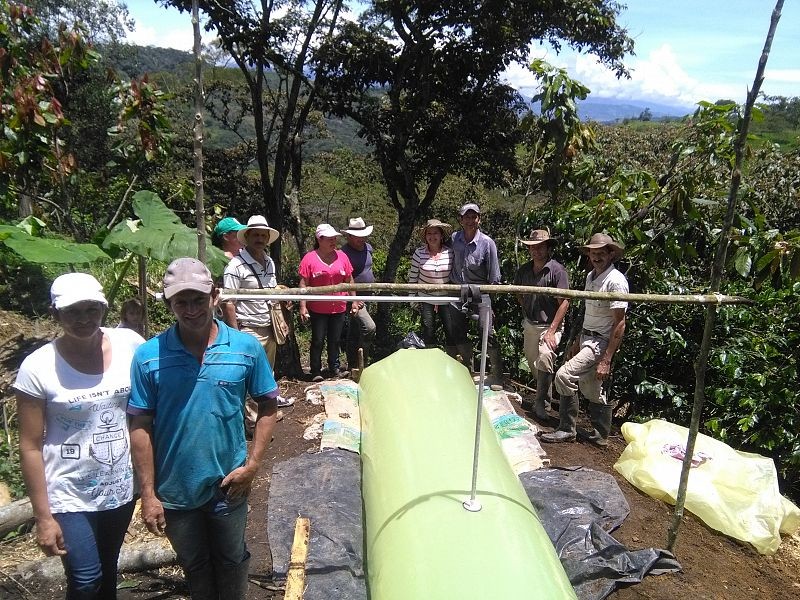
The UTA Foundation is currently leading an initiative to implement biogas technologies at small coffee farms in four districts of Colombia. The aim of this initiative is to improve the production processes at the plants, as well as enhancing economic, social and environmental aspects of the communities involved.
One of our recent SEPS projects under the framework of the Colombian Biomass Network – RedBioCOL – aims to make use of the organic waste generated by coffee cultivation and common practices in diversified production processes. Three technologies will be implemented to establish the energy sovereignty of the farmer organisations: gasification-fuelled cookstoves, tubular plug-flow biodigesters and gasification-fuelled coffee dryers.
Construction and implementation activities related to the technologies have recently been carried out at a number of coffee farms. Furthermore, training sessions were run at UTA’s headquarters, during which the input of coffee into a drying unit and the operation of a corresponding biomass gasifier were demonstrated for 6 consecutive hours. This practical display is important because most participating farmer organisations are familiarising themselves with biogas technology for the first time.
Other workshops aimed at disseminating the results of the project among various local and regional actors, as well as targeting university students who have expressed interest in becoming involved in monitoring activities.