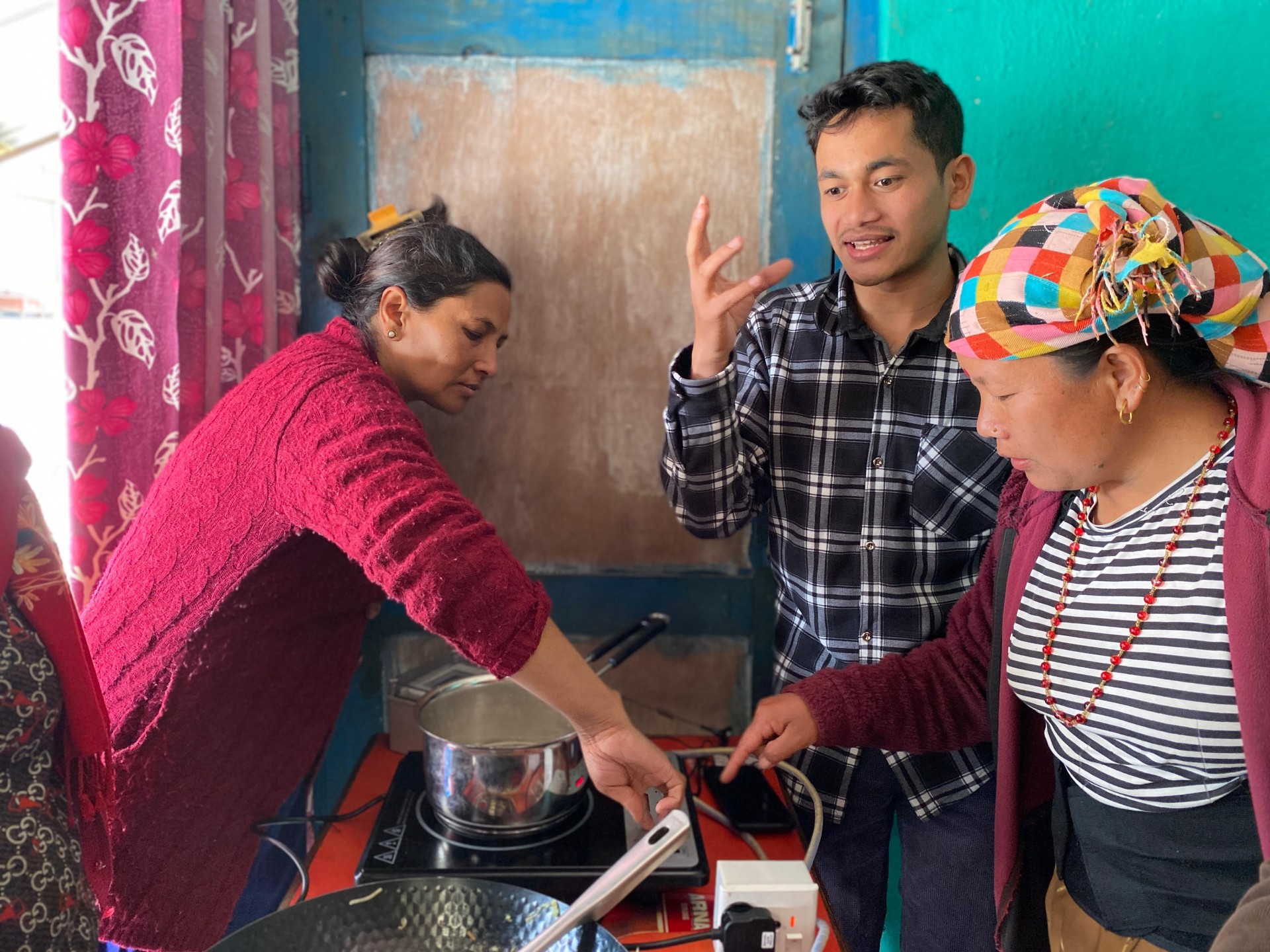
E-cooking offers promising opportunities for rural enterprises in Nepal, boosting savings, health, and micro-hydropower sustainability. Our new report highlights key findings from twenty small businesses in Baglung.
Biogas Generation at Colombian Coffee Farms
The UTA Foundation is leading an initiative to implement biogas technologies at small coffee farms in four departments of Colombia. The aim of this initiative is to improve the production processes at the plants, as well as enhancing economic, social and environmental aspects of the communities involved.Minimize
One of our recent SEPS projects under the framework of the Colombian Biomass Network – RedBioCOL – aims to take advantage of the organic waste generated by coffee cultivation and common practices in diversified production processes. Three technologies will be implemented to establish the energy sovereignty of the farmer organisations: gasification-fuelled cookstoves, tubular plug-flow biodigesters and gasification-fuelled coffee dryers.
Recent project activities include:
- Six community networking activities at the different project demonstration sites
- Surveys on coffee processing and potential biomass use
- A workshop to exchange experiences on biomass gasification among the participating coffee farming organisations
- Design of the renewable energy technologies to be implemented
The next working steps will include the implementation of the technologies, monitoring and evaluation activities, training programmes and the creation of promotional materials.