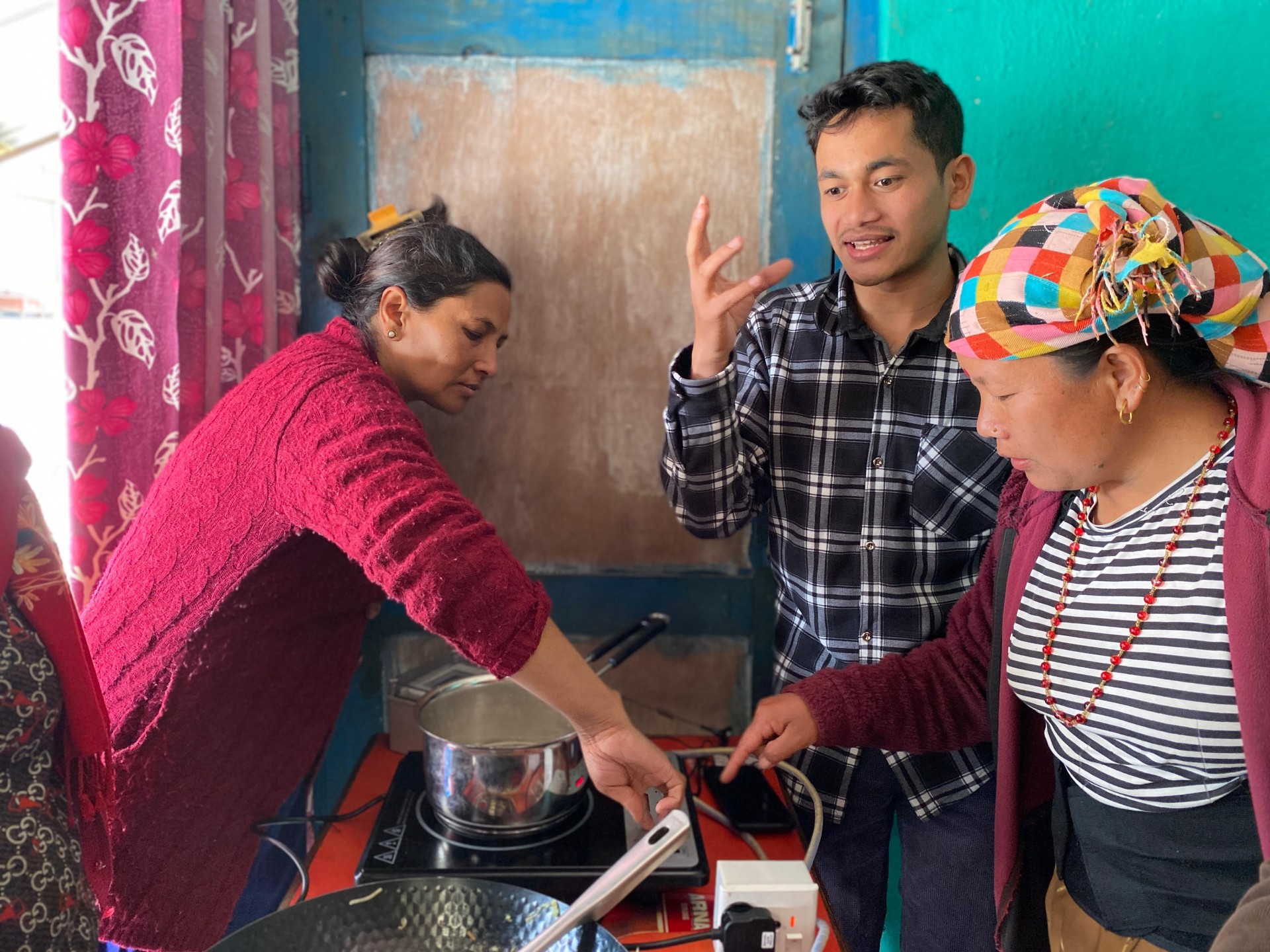
E-cooking offers promising opportunities for rural enterprises in Nepal, boosting savings, health, and micro-hydropower sustainability. Our new report highlights key findings from twenty small businesses in Baglung.
Community-Managed Energy Service for Vegetable Market Chain
On many farms in Nepal surface irrigation systems are not feasible, as water sources are below ground level. In these locations farmers can only produce one crop due to the lack of year-round irrigation, resulting in low productivity and income. One of our SEPS projects aims to introduce photovoltaic pumping systems for irrigation, in order to increase both production levels and the variety of crops grown.
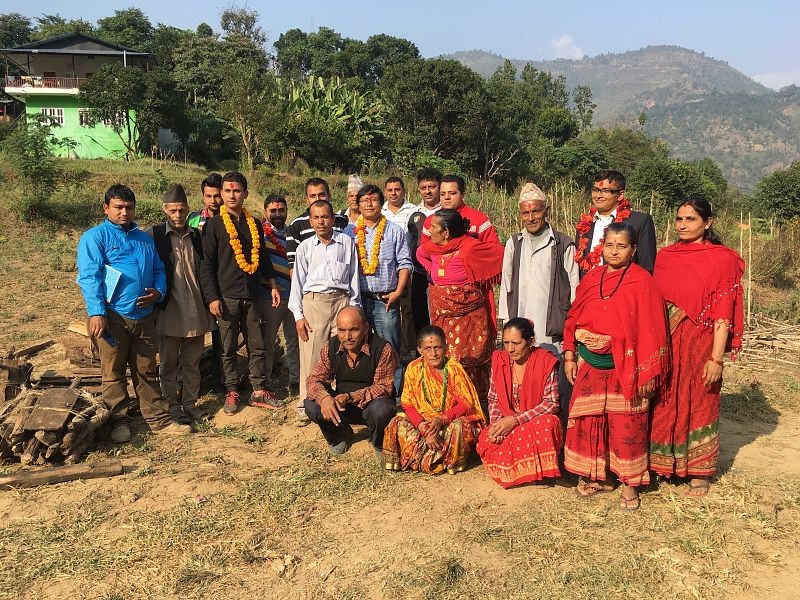
This project aims to establish an innovative business model consisting of impact investment and grants, to facilitate a community-managed irrigation system. During the recent project phase, detailed feasibility studies of three prospective sites were completed and two sites were eventually selected for installation of the pumping systems: Aarubastar, Salang VDC-09, Dhading; and Basan, Chatiwan VDC-02, Makwanpur.
The financing model was discussed and clarified between the communities and cooperatives and an agreement between the financer (SunFarmer), farmer groups and local cooperatives has been concluded. Furthermore, the most appropriate vegetables for cultivation at the project sites have been identified. The photovoltaic pumping systems are currently being installed in Dhading and Makwanpur, with the construction works monitored by Practical Action and other NGOs.
Read more about this project on our SEPS page: Community Managed Energy Service for Vegetable Market Chain.