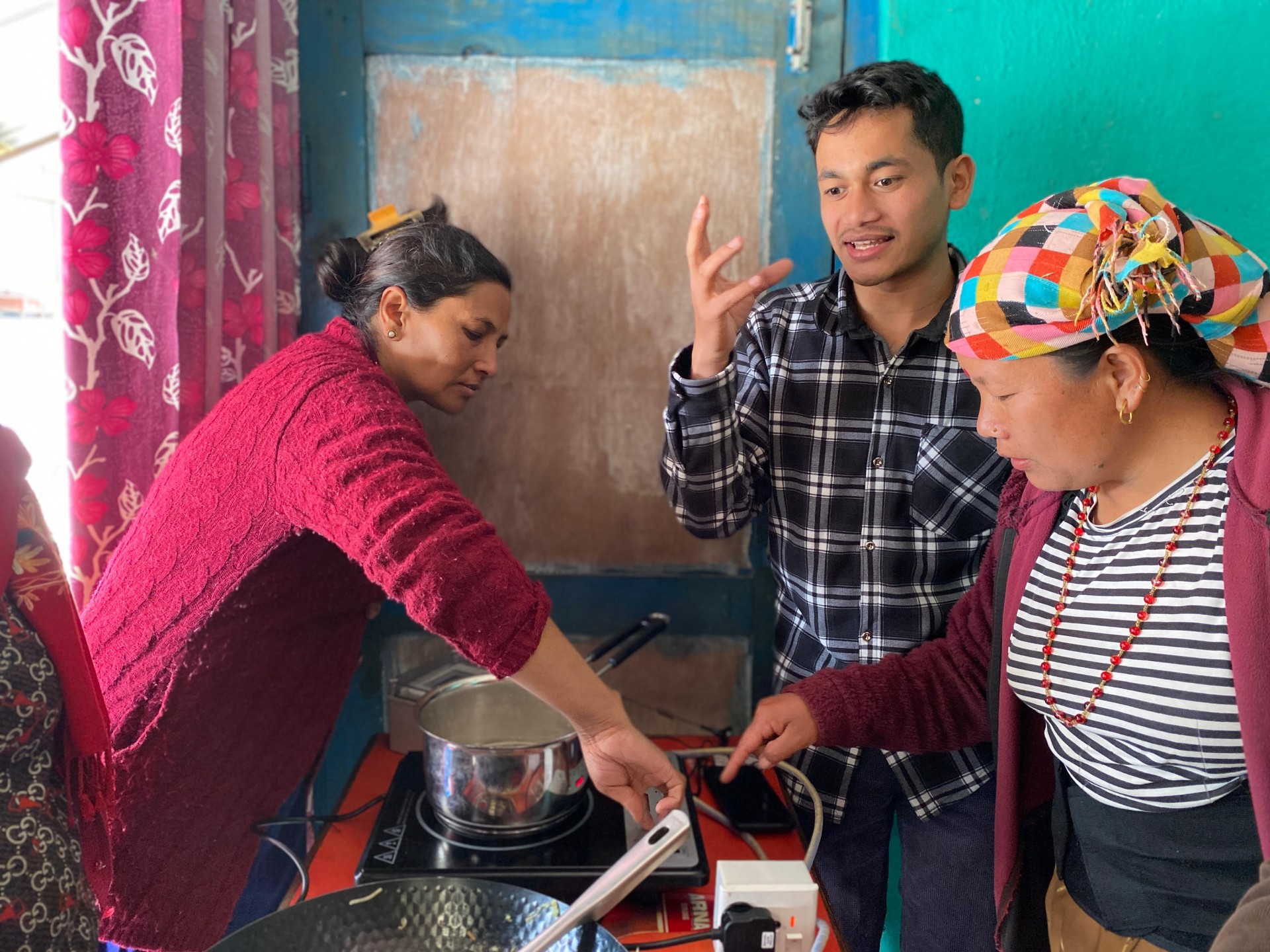
E-cooking offers promising opportunities for rural enterprises in Nepal, boosting savings, health, and micro-hydropower sustainability. Our new report highlights key findings from twenty small businesses in Baglung.
Learning About Solar Water Pumping Technology In Nepal
Winrock International aims to make solar water pumping technology affordable to small farmers in Nepal. In order to share experiences and know-how among stakeholders, they recently hosted a knowledge exchange workshop in the country. Read all about it here!
This workshop was jointly organized by Winrock, NACCFL and the Renewable Energy for Rural Livelihood Programme / Alternative Energy Promotion Center (AEPC).
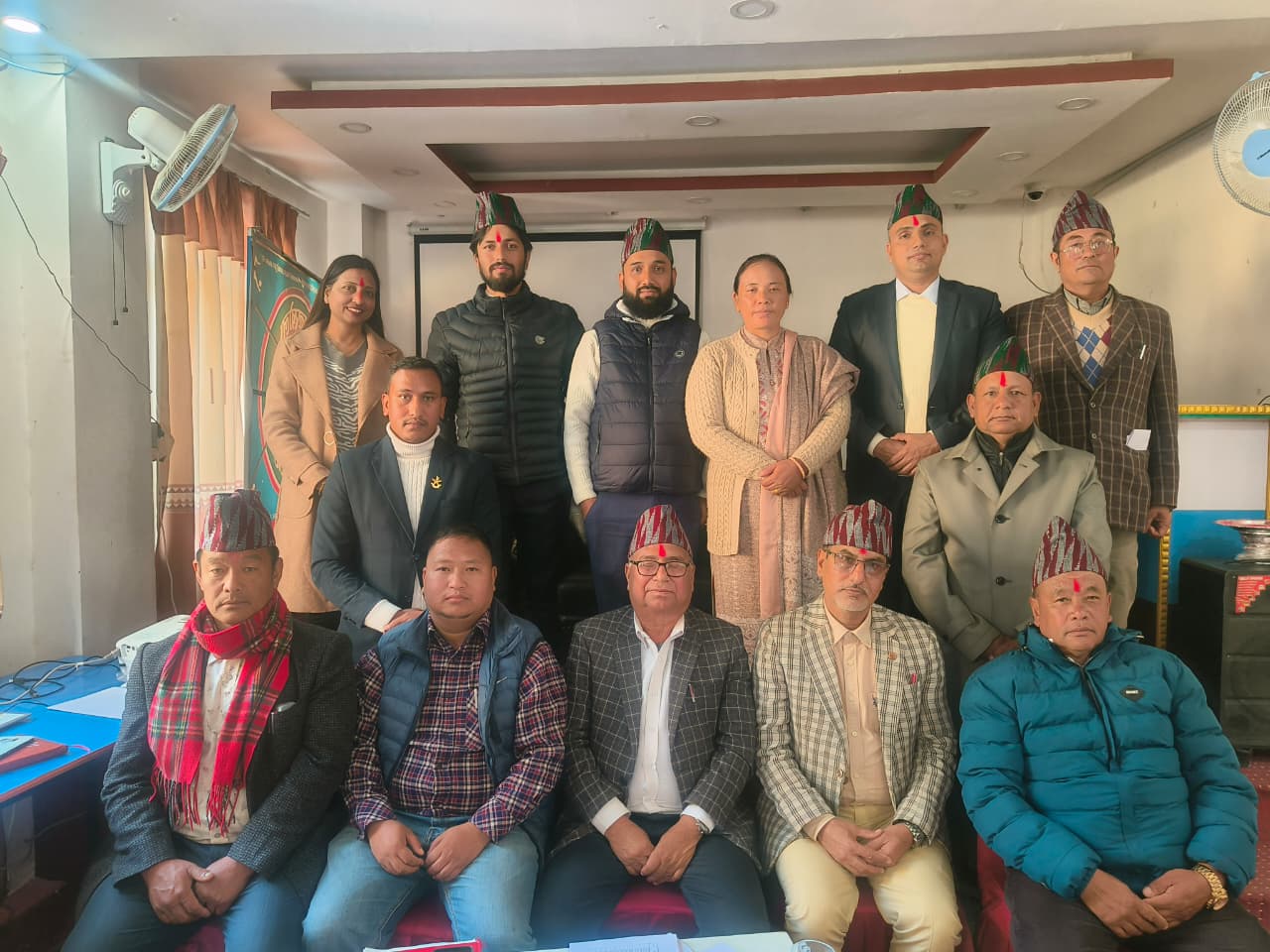
A total of 53 participants joined the workshop to discuss and work on the following objectives:
- To expand the knowledge of board members of small farmer cooperatives on solar water pumping technologies
- To share experiences, success stories and best practices from farmers who already utilise these technologies
- To inform about product details, sizes, prices and other factors of the systems
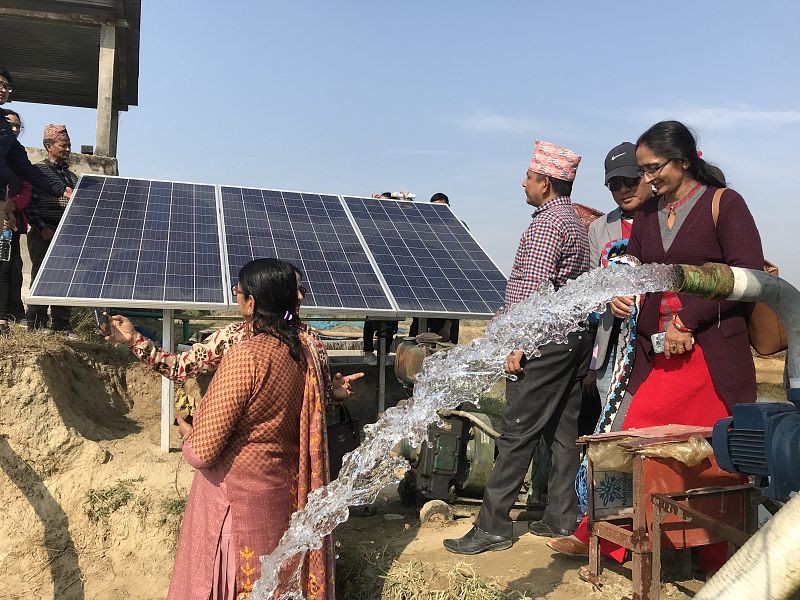
- To carry out a field visit to a small water pumping system installed at a fish and poultry farm for practical observation and interaction with local farmers
Overall, the participants found the workshop to be very informative and helpful. They learned not only about technological aspects, but also government subsidy programmes, financial background, and how the technology benefits other aspects of people’s lives.
For more impressions of the activities, visit our Facebook page!
Read more about this WISIONS SEPS project here: Knowledge Exchange to Make Solar Water Pumping (SWP) Systems Affordable for Small Farmers