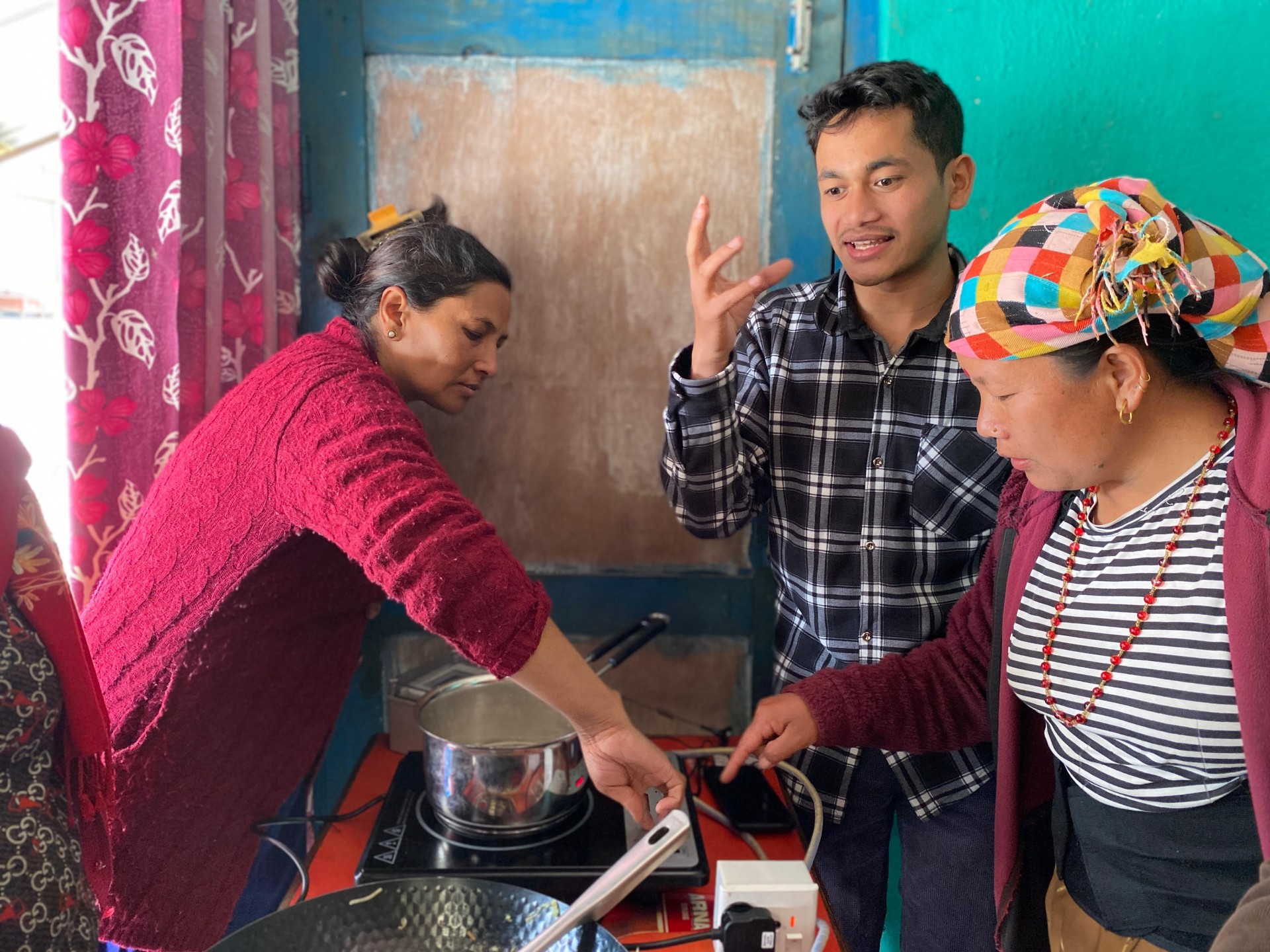
E-cooking offers promising opportunities for rural enterprises in Nepal, boosting savings, health, and micro-hydropower sustainability. Our new report highlights key findings from twenty small businesses in Baglung.
Rebuilding Infrastructure for Sustainable Energy Access in Nepal
One of our SEPS projects aims to rebuild infrastructure which was destroyed by an earthquake in central Nepal during April and May 2015. The second working phase of this project, which is being implemented in the Gorkha District of Nepal (the epicentre of the 7.8 M earthquake and one of the highly affected districts), has now been successfully completed.
The 2015 earthquake and subsequent aftershocks triggered landslides and other geo-hazards causing massive destruction. This also affected the micro hydro power plants which had been installed by Practical Action in 2013 and 2014. After the earthquake, all these MHPs were destroyed and became non-operational. Consequently, the 14 energy-based enterprises which had been established during the project period were also no longer able to operate.
As communities and entrepreneurs had invested money in the MHPs and enterprises, they faced huge losses. In the first project phase, the main focus was on ensuring community participation and mobilisation of NGO partners, as well as related stakeholders, to better understand the recovery and reconstruction needs of both the communities and the MHPs. In the recently completed second phase, the District Development Committee (the local government organisation responsible for planning and coordinating all development activities in the district) accepted the project as part of its annual development plan.
Furthermore, a detailed feasibility study of 6 MHPS was carried out to determine their reconstruction needs. Based on this study, an expert team of consultants developed a detailed earthquake-resistant design to ensure that when the MHPs are rebuilt, aftershocks and future earthquakes will not hamper their operation. In the next stage of the project, three selected communities will be helped to contract MHP installers to reconstruct the systems and associated infrastructure.
More general information is available on our project page: RISE – Rebuilding Infrastructure for Sustainable Energy Access.