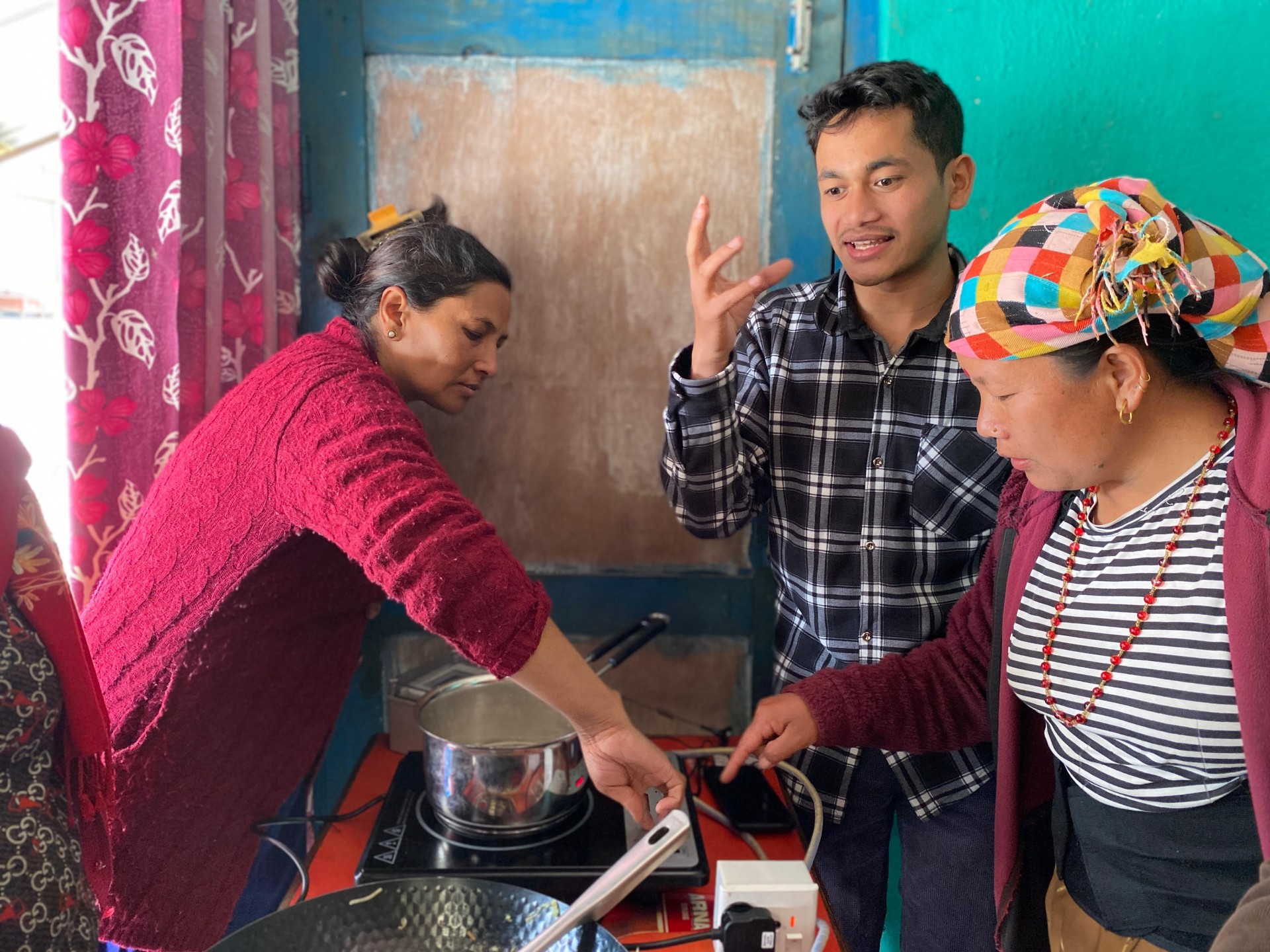
E-cooking offers promising opportunities for rural enterprises in Nepal, boosting savings, health, and micro-hydropower sustainability. Our new report highlights key findings from twenty small businesses in Baglung.
What If The Grid Arrives? How Off-Grid Renewable Energy Projects Have Adapted To Grid Arrival
Off-grid renewable energy projects sometimes remain off-grid in the long-term. But in some cases, the national electricity grids reach these areas, leaving communities, governments, and other stakeholders with major decisions to make. In this webinar, we have shed light on the experiences faced across the global south through case studies and heard first-hand what happens when the grid arrives.
Moderator: Molly Hurley Depret
Speakers:
Chris Greacen, Palang Thai (further links to his books, see below)
Rebecca Leaf, Association of Rural Development Workers Benjamin Linder (ATDER-BL, Nicaragua)
Junaed Tazdik, IDCOL Assistant Manager, SHS Program
Mafruda Rahman, Green Climate Fund (GCF) unit of IDCOL
How can small-scale renewable energy projects adapt and plan for national grid expansion? What will become of these stand-alone renewable energy systems or micro-grid solutions? Will they sustain and survive? Can and shall they become connected to the grid? What are preconditions and challenges? And how can communities with off-grid systems best plan and prepare for this possibility?
In principle, off-grid mini-grids powered by micro-hydro, solar PV or by combination of renewable energy technologies (hybrid generation) can be connected to the national grid. However, many technical, regulatory, and management challenges remain. For other solutions, such as solar home systems, the question is whether they are sustainable and might be a good and independent alternative to the grid – especially if the grid does not offer stable service. In the worst case, however, the grid’s arrival can lead to the abandonment of off-grid systems and a loss not only of the financial and resource investments, but possibly also of jobs, technical know-how, and autonomy.
What will become of these stand-alone renewable energy systems or micro-grid solutions? Will they sustain and survive? Can and shall they become connected to the grid? What are preconditions and challenges? And how can communities with off-grid systems best plan and prepare for this possibility?
Links to linked literature:http://tiny.cc/BottomUp
http://tiny.cc/gridarrival