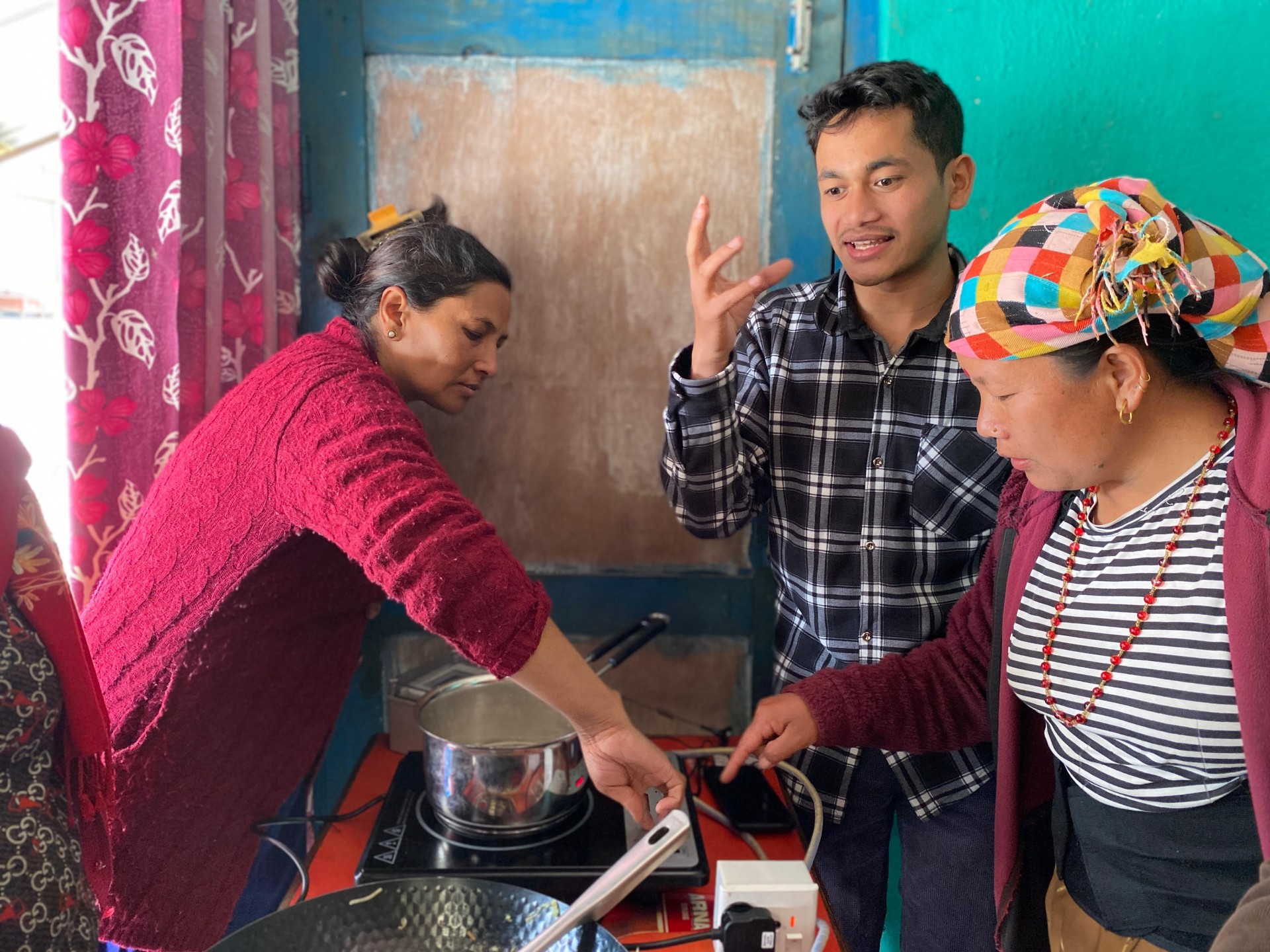
E-cooking offers promising opportunities for rural enterprises in Nepal, boosting savings, health, and micro-hydropower sustainability. Our new report highlights key findings from twenty small businesses in Baglung.
WISIONS at the SDEWES Conference 2015 in Dubrovnik, Croatia
The WISIONS team participated in the 10th “Conference on Sustainable Development of Energy, Water and Environment Systems” from 27 September until 2 October 2015 in Dubrovnik, Croatia.
The 10th “Conference on Sustainable Development of Energy, Water and Environment Systems – SDEWES” was dedicated to the improvement and dissemination of knowledge on methods, policies and technologies for increasing the sustainability of development by de-coupling growth from natural resources and replacing them with knowledge based economy, taking into account its economic, environmental and social pillars, as well as methods for assessing and measuring sustainability of development, regarding energy, transport, water, environment and food production systems and their many combinations.
At this year’s edition, the WISIONS team presented a poster entitled “Delivery and Business Models for Small-Scale Renewable Energy Technologies – Analysis of Successful Approaches“, and chaired a session on “Practitioners Networks on Sustainable Energy Technologies – How Can Active Exchanges Foster the Transition Process in Developing Regions?“. In addition, we also offered a panel presentation entitled “What are Challenges for the Scientific Community and Politics on a Global Scale to Unfold the Research Potential?”.
More information on the conference is available at SDEWES’ homepage, where you can also find the conference programme.