
By loading the map you accept the privacy policy of Google.
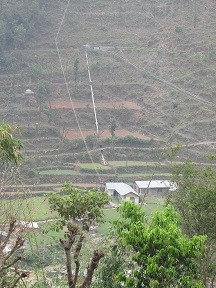 The aim of the project is to improve the reliability and accessibility of the electricity supply in rural areas of Nepal by using interconnected mini-grids involving various complementary renewable energy sources. The project will be implemented in the Gulmi district of Western Nepal. The current micro-hydro plants at Daram Khola (85 kW) and Paropakar (132 kW) will be interconnected in order to stabilise the grid supply. Daram Khola MHP services 760 households and is already running at peak capacity, meaning that there is not sufficient power for consumers to use more appliances or to start productive local businesses. Interconnecting this plant with the neighbouring Paropakar MHP, which has excess generation, is a solution to this problem. A regulatory framework for the operation of interconnected mini-grids will be developed.
This method of improving electricity supply could offer significant potential for the future, especially for productive use and income generating activities. The project is implemented by the German institute Fraunhofer ISE in cooperation with the Alternative Energy Promotion Center AEPC in Nepal.
Projects with same technology
Exchange: Practice-to-Policy Exchange for Grid-Connected Micro Hydro Power in South/Southeast Asia
This exchange activity aims to nurture knowledge exchange between multi-actors for grid-connected micro hydro technology across the region of South and Southeast Asia and to enable members of the Hydro Empowerment Network (HPNET) to operate renewable energy technologies apart from the national grid.
Integrating Watershed Development and Conservation in the Ancestral Forests of Ulu Papar
In this project, Green Empowerment and Tonibung seek to improve the socioeconomic and environmental well being of the villages of Pongobonon, Lokogungan and Kalangaan in Malaysia.
Projects in same country
RISE - Rebuilding Infrastructure for Sustainable Energy Access
This project aims to contribute to the vision of “Building Back Better” to rebuild disaster-resilient communities by restoring sustainable energy access. The contribution will be in the form of the restoration of the earthquake-struck micro hydro systems in order that the livelihood options for communities and individuals can be re-established.
Promoting Use Of Locally Produced Jatropha Oil As A Sustainable Source Of Rural Energy For Irrigation
To increase the productivity and Efficiency of Nepal's agricultural sector AND alleviate poverty in rural Communities by means of a sustainable irrigation system