E-cooking offers promising opportunities for rural enterprises in Nepal, boosting savings, health, and micro-hydropower sustainability. Our new report highlights key findings from twenty small businesses in Baglung.
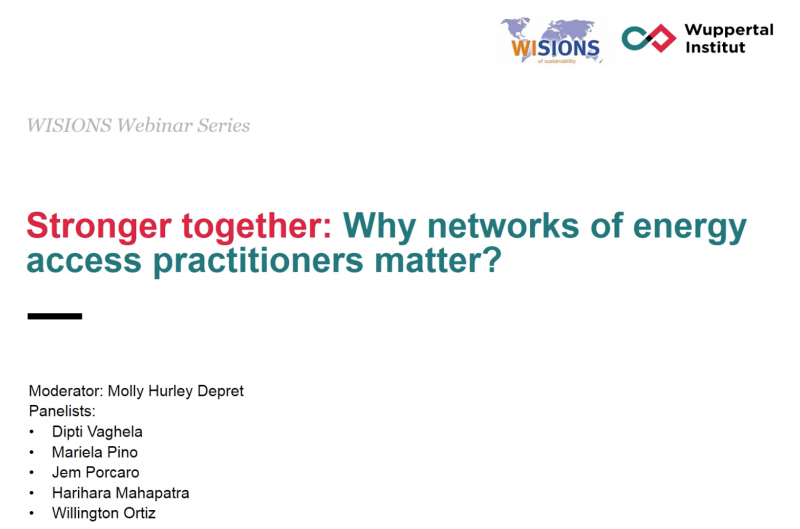
Stronger Together: Why Networks of Energy Access Practitioners Matter
On 18 January, WISIONS hosted the first in a series of webinars. It was entitled “Stronger Together: Why Networks of Energy Access Practitioners Matter” – watch the recording or view the individual slides now.Minimize
Access to energy has the potential to change lives across the Global South, and it is enshrined in Sustainable Development Goal 7. But often efforts are fragmented, and the same mistakes are repeated. That’s where networks of energy practitioners come in.
Energy practitioners are spearheading efforts to make sure that those most at risk of being ‘left behind’ are included. Their work in the field, academia, development institutions and in communities means that they have in-depth knowledge of the requirements, conditions, and challenges of ensuring sustainable energy access. Mobilizing their knowledge and expertise is essential to achieving SDG 7 and supporting many other SDGs for people and the planet.
Moderator:
- Molly Hurley Depret
Speakers:
- Jem Porcaro, Senior Director for Energy Access, UN Foundation
- Willington Ortiz Orozco, Wuppertal Institute for Climate, Environment and Energy
- Dipti Vaghela, Hydro Empowerment Network Coordinator and Fulbright Public Policy Fellow
- Mariela Pino, RedBioLAC Coordinator
- Harihara Mohapatra, COO, Clean Energy Access Network (CLEAN)
You can find the recorded webinar below and all slides as pdf here: ALL SLIDES Webinar1 WISIONS 18012018

By loading the video, you agree to YouTube’s privacy policy.
Learn more