
This project aims to improve the traditional water mills by replacing wooden equipment in order to make them more efficient and to demonstrate the importance of the technology in the mountainous region. Furthermore, the supply and demand gap of products (such as grains) processed by the water mills could be closed by efficient production and effective marketing.
By loading the map you accept the privacy policy of Google.
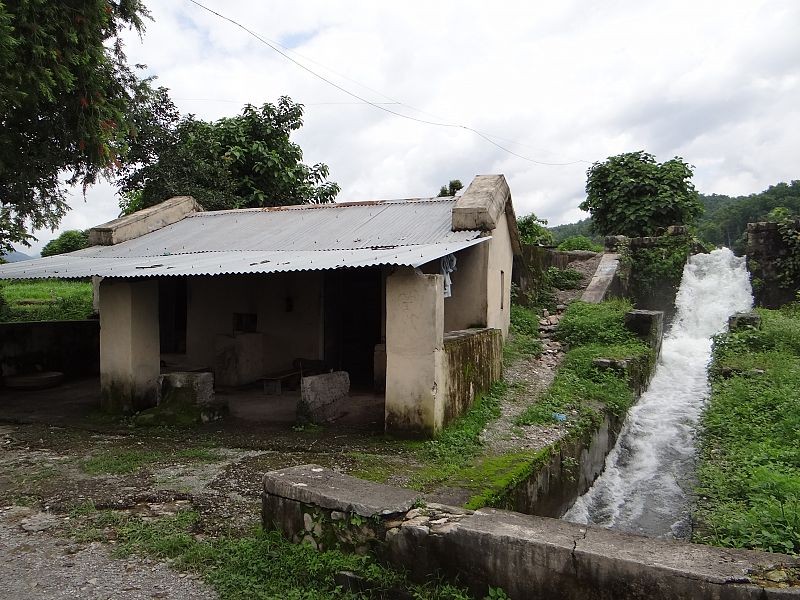 The mountainous state of Uttarakhand is well known for its rivers and streams, which are directly or indirectly fed by the surrounding Himalayan peaks. For many years, the inhabitants of these regions have been harnessing the river water for the supply of drinking water, irrigation, hydro power generation and other activities. There are an estimated 15,000 traditional water mills in the state of Uttarakhand, of which only 65% are in operation and 10% are reported to be totally defunct.
The specific objectives of the project are:
The mountainous state of Uttarakhand is well known for its rivers and streams, which are directly or indirectly fed by the surrounding Himalayan peaks. For many years, the inhabitants of these regions have been harnessing the river water for the supply of drinking water, irrigation, hydro power generation and other activities. There are an estimated 15,000 traditional water mills in the state of Uttarakhand, of which only 65% are in operation and 10% are reported to be totally defunct.
The specific objectives of the project are:
- To identify existing and potential livelihood activities that could use the mechanical and/or electrical output available from improved water mills in the district of Uttarakhand
- To facilitate capacity building and training for the owners of the selected water mills
- To facilitate the upgrading of the selected water mills
- To establish marketing opportunities for the products processed by the water mills
Projects with same technology
Exchange: First Central American Conference of Small-Scale Hydroelectric Generators: Sharing Experiences and Coordinating Efforts for Efficient Management in Providing Clean Energy
To promote the exchange of knowledge and sharing of experiences between practitioners involved in small-scale hydroelectric projects
Micro Hydropower for the rural population in Cameroon
Projects in same country
Energy enterprises for development in rural areas: the case of clean cooking fuel
To develop and operate a sustainable rural demonstration project: a community dairy biogas enterprise
Value-addition to food crop processing: Converting banana plant-waste to cooking-fuel
To provide clean cooking fuel at village level while improving income opportunities and giving appropriate treatment to crop residues