
By loading the map you accept the privacy policy of Google.
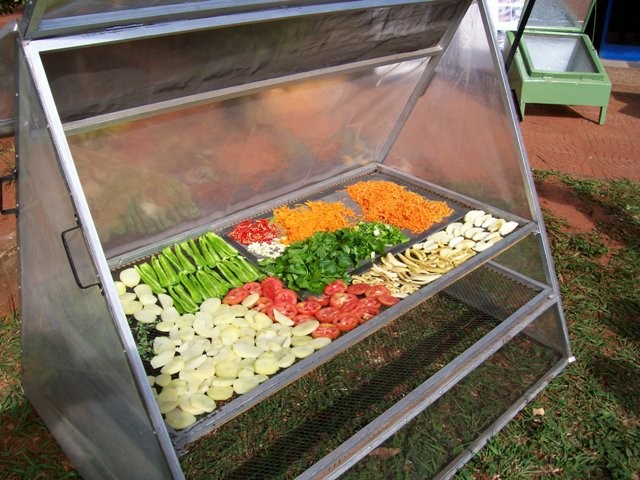 The "Solar Food Processing & Conservation" project, launched by ISES four years ago, aimed to develop efficient methods of solar food processing and to extend the use of this technology (see Phase I and II). The focus of this third phase was an international conference of solar food processing, which took place in January 2009 in Indore, India. The conference (www.solarfood2009.org) provided an active exchange platform for members of the established network (Phase I, SEPS 1), facilitated to share experiences from all over the world, offered workshops with food, marketing and technology experts and fostered new cooperation between participants.
Projects with same technology
Solar Kiosks for the Diffusion of Solar Cookstoves in Micro-Enterprises and Urban Homes
This project aims to raise awareness about the viability and benefits of solar parabolic cookstoves via practical demonstration by street food vendors
The solar food network (www.solarfood.org) was established in 2006 with the financial support of WISIONS. The project's aim is to provide ideas and examples of food processing with sustainable energy sources in developing countries. So far it has been a successful network, with over 200 registered members from more than 40 countries. The website continuously attracts visitors and new registrations. No fees are charged for registration. The main objective of this short-term support was to update the website's practice module, making it more attractive and informative for visitors to the site. To reach this aim the template for uploading project data has been updated and a selection of good practice examples from SEPS projects and other projects have been added to the website. Overall, the website has been improved with audio-visual material such as images and videos that now provide visitors with ideas and successful examples of harvesting solar energy for the commercial production of food products.
Projects in same country
Establishment of Demand-Driven Sustainable Improved Watermill Cluster in the State of Uttarakhand, India
This project aims to improve the traditional water mills by replacing wooden equipment in order to make them more efficient and to demonstrate the importance of the technology in the mountainous region. Furthermore, the supply and demand gap of products (such as grains) processed by the water mills could be closed by efficient production and effective marketing.
Powering a village sustainably: generating electricity from waste-based biogas
To facilitate access to electricity in rural communities through community enterprises that generate electricity by using local sources.